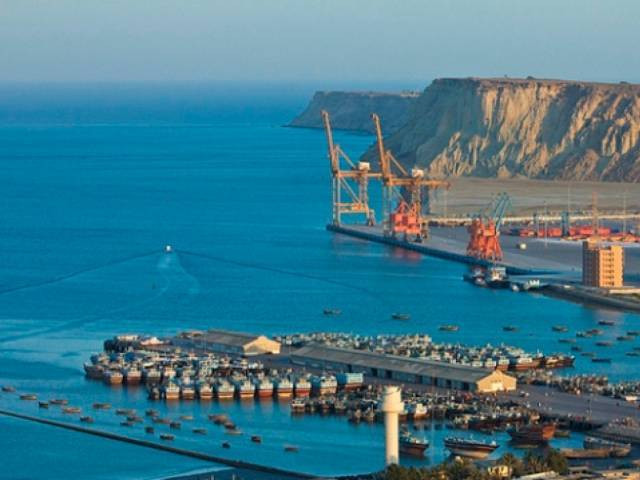

A few days ago, Prime Minister Shehbaz Sharif met with President Xi Jinping, with China-Pakistan Economic Corridor (CPEC) high on the agenda. The leaders agreed that, building on past successes, it was time to give new momentum to CPEC's implementation.
Both sides decided to accelerate work on the second phase and align CPEC, Pakistan's economic backbone, with the five corridors and Uraan Pakistan, built around the Five Es – Export, Energy, Equity, Environment, and Education. To guide future actions, an Action Plan was issued after the meeting.
However, before moving to implementation, Pakistan must first "prioritise its priorities." Based on the Action Plan and related discussions, a few suggestions can guide policymakers and implementers.
The first step is identifying the top priority. While both industry and agriculture are vital, given Pakistan's current situation, agriculture must come first. It is the most critical sector, deeply linked to all others, and essential for achieving inclusive development.
Agriculture contributes 23.54% to GDP and employs 37% of the labour force. It supplies raw materials to industries such as textiles, food, and leather, and contributes directly to foreign reserves through exports like rice. Yet, it faces serious challenges, including climate change, water scarcity, and low productivity, among others.
Climate change affects water availability and quality, and extreme weather patterns are worsening the situation. Low seed quality and poor inputs reduce productivity and farmer income, deepening poverty in rural areas. This sector, therefore, deserves urgent attention and top priority under CPEC-II.
Collaboration should focus on climate-smart farming, quality seed production, efficient water management, and input manufacturing. The government should create small, effective programmes to attract targeted funding in these areas and speed up the establishment of nine agriculture research centres under CPEC.
Cooperation must balance business-to-business (B2B) corporate farming with government-to-government (G2G) partnerships. Promoting corporate agriculture is necessary, but policies must also protect small farmers, who form the majority.
Around 89-90% of farms are smaller than 12.5 acres. Of these, 1.25 million are less than 1 acre, 2.3 million are under 2.5 acres, and 1.7 million are below 5 acres, together representing 64% of all farms. Poverty levels are highest among them.
Thus, agricultural cooperation should be divided into two categories: growth-focused and development-focused. Growth can be achieved through B2B corporate farming, while development should rely on G2G cooperation. (Further guidance can be found in a concept paper written for the CPEC Authority.) Pakistan must proceed carefully; unchecked corporate farming could prove counterproductive.
Industrial cooperation is another key CPEC pillar that requires careful handling to deliver results. Pakistan should adopt a two-step industrial policy: 1) supply chain inclusion, and 2) joint ventures.
This approach is needed due to the mismatch between Pakistani and Chinese companies. Pakistan's economy depends heavily on small and medium-sized enterprises (SMEs), most of which cannot immediately engage in joint ventures. However, there are numerous areas where Pakistan can integrate into Chinese supply chains.
For instance, China is now a leading producer of electric vehicles (EVs) and related technologies. Pakistani companies that manufacture quality nuts, bolts, and small parts could be included in these supply chains.
Pakistan can request that China open opportunities for local SMEs to supply components for Chinese EV producers. This would strengthen Pakistan's SME base, increase foreign reserves, and create jobs. Similar opportunities exist in other sectors as well.
To further strengthen exports, Pakistan must pursue brand development under CPEC-II. The country produces some of the world's best goods but struggles to build global brands. Pakistan is globally known for high-quality sports goods like FIFA footballs, and for cutlery and surgical instruments.
However, these products often reach international markets through foreign intermediaries, reducing profits and visibility. Many Pakistani sports goods and surgical tools, for instance, are sold in Africa under German labels.
The main reasons are limited financing and technology gaps, which prevent Pakistani firms from competing with established global brands. Combining Pakistani craftsmanship with Chinese capital and technology could produce globally competitive brands, creating jobs and export potential.
In developing joint ventures, Pakistan should leverage its State-Owned Enterprises (SOEs) to address the structural mismatch with Chinese firms. Two options are possible: joint ventures between Pakistani SOEs and Chinese private firms, or between SOEs from both countries.
Ideal Pakistani partners include the Railways, Pakistan International Airlines (PIA), and Steel Mills. These ventures could revive struggling public entities and modernise key industries.
Science and technology are also central to CPEC-II. Pakistan must aim to turn this cooperation into a source of hard power, not merely soft power. That means building the capacity to produce technological products and machinery domestically. Pakistan should focus on developing firms that manufacture ICT equipment and industrial machinery, positioning itself as a regional innovation hub.
To achieve this, Pakistan needs to focus on two priorities. First, create opportunities that enable knowledge generation, the foundation of innovation. Second, build the infrastructure for world-class research and development (R&D), backed by strong financial support.
Pakistan and China can jointly encourage private business groups to invest in R&D. Chinese private companies are now among the world's largest R&D spenders, offering valuable partnership opportunities. However, all such initiatives must operate strictly on merit.
In conclusion, Pakistan must internalise one lesson from CPEC Phase-I: only performance matters, not promises. Less talk and self-promotion, more work and delivery, should define this phase. Effective policies, detailed work plans, and timely execution will matter far more than rhetoric. Success itself will be the best promotion for all those involved.
THE WRITER IS A POLITICAL ECONOMIST AND VISITING RESEARCH FELLOW AT HEBEI UNIVERSITY, CHINA
Source link
