
Economics is solely about incentives and how people respond to incentives. People like doing things they find attractive and avoid things they find off-putting. Government actions affect both the attractiveness and repulsiveness of activities. Just how government interacts with the world at large determines economic destiny.
Supply-side macroeconomics is framed into six major categories: Taxation, government spending, monetary policy, regulations, international trade and privatisation – called the six pillars of supply-side economic policies. These pillars are the ideal policies for sustainable economic growth and each has a degree of importance.
Taxation
The goal of taxation is to have a tax system that collects the requisite revenue to fund government while doing the least damage to the economy. The best structure of taxation is to have the lowest possible tax rate on the broadest possible tax base.
The lowest possible tax rate provides the least incentives for people and businesses to avoid, evade, or otherwise not report taxable income. And the broadest possible tax base – eliminating as it should deductions, exemptions, exclusions, credits, and other omissions and preferences – provides taxpayers with the least amount of opportunity to place income in tax – advantaged categories to avoid paying taxes. This is the golden rule for taxation.
Government spending
Government spending should be limited, as best as possible, to providing products and services that the government alone produces more efficiently than the private sector. These government-centric categories frequently include the judiciary, military, police, highways, schools and some other highly specialised activities. The role the government plays in how it spends its revenue is central to prosperity. A government that is too small will definitely hold back prosperity, as will a government that is too large.
The government, like any other provider of goods and services, has an optimal size. It should produce as efficiently as possible what it does produce using the least number of resources as is feasible to get the job done. Thus, not only is the level of government spending defined, but the specific incentives used by the government to produce the correct amount of goods and services must be optimised. This set of criteria should also be a central feature of all projects sponsored by the government while sub-contracting to the private sector.
Monetary policy
There is little that can bring an economy to its knees faster than unsound money, unhinged paper currencies and the accompanying inflation and high interest rates that invariably attend bad monetary policy. A key function of sound money is to provide a stable valued medium of exchange where all participants know what the numeraire value is and also what its value will be.
Secular inflation and excessively high interest rates destroy the information content of the unit of account and damage markets in the present and capital markets where future goods and services are exchanged. Unsound money is a major cause of poverty, despair and economic underachievement, while sound money is the antidote.
Regulations
Regulations cover an enormous area of economic activities and take on a vast array of forms. Regulations exist to minimise negative market externalities that would result from unregulated private activity and to maximise positive market externalities, also resulting from private activity. One could refer to regulations as "ghost taxes".
Excessive regulations can be stifling to economic prosperity and growth. In all, regulations should be directed to the specific externalities at hand and avoid as much as possible unintended deleterious consequences and collateral damage.
As a general rule, regulations and oversight have been justified by overstating benefits and understating costs. Enacting regulations should be difficult and require as much political oversight as possible. Virtually every regulation should have a sunset provision where its effects can be evaluated before it is renewed, removed or reformed.
International trade
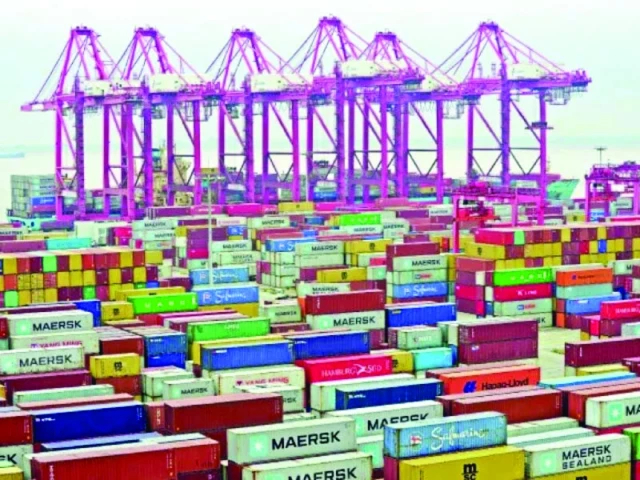
Tariffs, quotas and non-tariff trade barriers are anathema to economic growth, prosperity, and the elimination of poverty. Trade barriers placed on foreign products are mistakenly considered a benefit by many politicians, when in fact they hurt their own citizens and economy and in turn make exports more difficult.
Just as people use their capital and work to earn the wherewithal to buy goods and services, so too nations export products to foreigners to purchase goods and services from them. These exports are the cost a country must pay to import, which is the benefit. The supply of exports is the demand for imports. Any impediment such as a tariff or quota on imports will have the same effect on trade as a tax on exports.
There is a close relationship between a country's exports and its imports and is analogous to what we could expect to see between a family's income and its expenditure. Tax income and there will be less spending. Tax spending and there will be less income. Export taxes do the same damage as tariffs.
Trade also has another wonderful beneficial effect by allocating capital from a net saver nation to net investor nations. A country's trade deficit is not only its imports exceeding its exports, but it also is the country's capital surplus. One country's savers can fund another country's investments, thereby creating jobs output and production. Free trade is a win-win for all involved.
Privatisation
Rule number one is that the role of government is to govern and not to run a business. A comprehensive plan for wholesale privatisation of these businesses needs to be developed and implemented as soon as possible. Revenues from the privatisation sales will go a long way to help fiscal quandary, but even more so the removal of these businesses from ownership ledgers removes a huge drain on fiscal solvency as well as on the limited high-talent personnel who have been diverted from proper government needs to oversee the operations of these loss-making state-owned entities. Privatisation will have a huge impact on prospects for any nation's prosperity.
All in all, the standard of government policies should be: a low rate, broad-based flat tax; spending restraint; sound money; minimal regulations; free trade; and privatisation.
These are the six pillars of supply-side macro-economics for sustainable economic growth.
The writer is a philanthropist and an economist based in Belgium
Source link
