
Increases the price of petrol to Rs336.15 per litre and HSD to Rs393.04 per litre
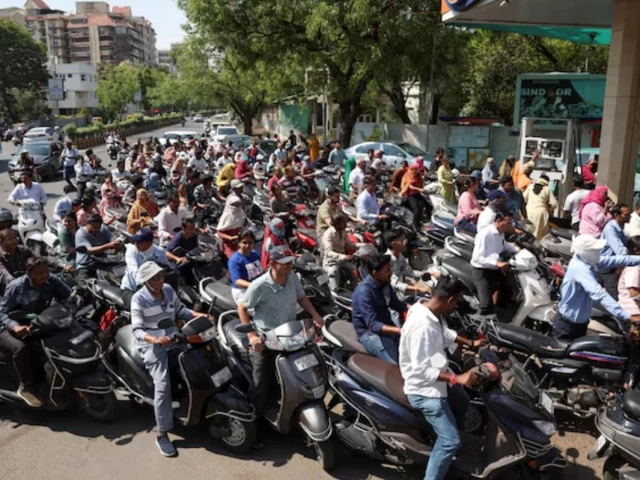
People queue to fill petrol in their two-wheelers with concerns over potential supply disruptions, but authorities say there are no shortages, amid the ongoing US-Israeli conflict with Iran, in Ahmedabad, India, March 23, 2026. Photo: Reuters
The federal government on Thursday increased the prices of petrol and high-speed diesel (HSD) by Rs1.09 and Rs2.42 per litre, respectively, for July 31.
According to a notification issued by the Ministry of Petroleum, the price of petrol has been fixed at Rs336.15 per litre, while HSD will now cost Rs393.04 per litre.
پیٹرول ایک روپے 9 پیسے فی لیٹر مہنگا کر دیا گیا: نوٹیفکیشن
— PTV News (@PTVNewsOfficial) July 30, 2026
ہائی اسپیڈ ڈیزل کی قیمت میں 2 روپے 42 پیسے فی لیٹر اضافہ: نوٹیفکیشن
پیٹرول کی نئی قیمت 336 روپے 15 پیسے فی لیٹر مقرر: نوٹیفکیشن
ہائی اسپیڈ ڈیزل کی نئی قیمت 393 روپے 4 پیسے فی لیٹر مقرر: نوٹیفکیشن#PetroleumPrices pic.twitter.com/Sc4obnPPmW
The latest revision comes a day after the government reduced the price of petrol by 0.75 per litre, while increasing the price of high-speed diesel by Rs2.24 per litre.
READ: Govt decreases petrol price by Rs0.75, increases HSD price by Rs2.24 for July 30
On July 17, the government introduced a daily fuel price review mechanism amid volatility in global oil prices following renewed hostilities in the Middle East.
The daily fuel prices are based on a seven-day average of international market rates to align with international standards.
During July, petroleum prices were revised several times. Following multiple revisions, petrol prices recorded a cumulative increase of more than Rs20 per litre during the month, while diesel also saw a significant rise. Authorities attributed the increases to changes in global crude oil prices, exchange rates, and import costs.
According to the Ministry of Petroleum, the daily pricing system aims to adjust fuel prices according to international markets, currency movements, and import expenses. However, experts believe that if increases are passed immediately, reductions should also reach consumers at the same pace to maintain public trust.
Pakistan does not currently have strategic petroleum reserves capable of meeting demand for several months. Fuel requirements are mainly managed through commercial stocks held by oil marketing companies, refineries, and imported cargo.
Source link
